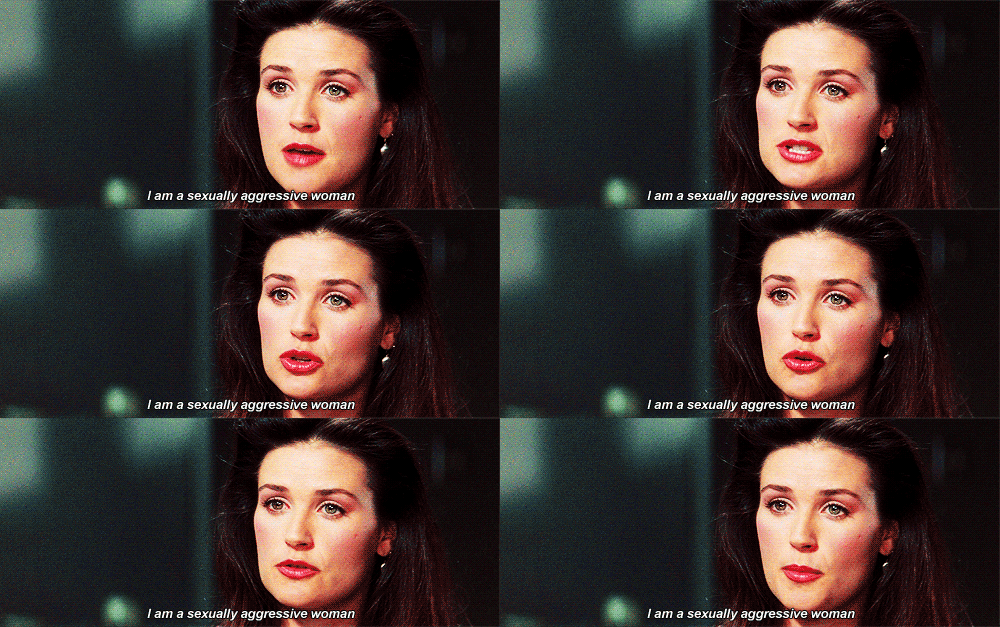
Peak era, boiling-lava-hot Demi Moore as workplace sexual harasser? Yes, please.
Tom Sanders is project manager of development at Digicom, a leading software and hardware developer in the Pacific Northwest. A spot opens up for a new head of overall development and Sanders belives he’s the best candidate. However, Tom’s boss promotes Meredith Johnson as his heir apparent instead. This is an especially tough pill to swallow for Tom because, you see, the cunning, drop-dead gorgeous Meredith is his former lover. Soon after, Meredith invites Tom to a late-night business meeting in her empty office, where idle chat about their lives quicly escalates to something far more personal. Meredith begins to force herself on the now-married Tom. After initially hesitating, Tom is soon receiving oral sex from the ferociously aggresive Meredith. Things continue to get extremely hot and heavy between them before Tom rips open Meredith’s shirt and violently throws her aside. She is furious at having her power move rebuffed, and the next day at the office Tom finds out just what lengths she’ll go to for revenge. Incredibly, even though she was clearly the aggressor, she’s now slapping him with a sexual harassment complaint. Tom hires a lawyer and counters with his own harassment complaint against Meredith. As the story unfolds, Meredith remains steadfastly fierce and unapologetic. She’s a bad girl to the bone, clearly painted as the villain of the story, but dammit if we don’t love her anyway.
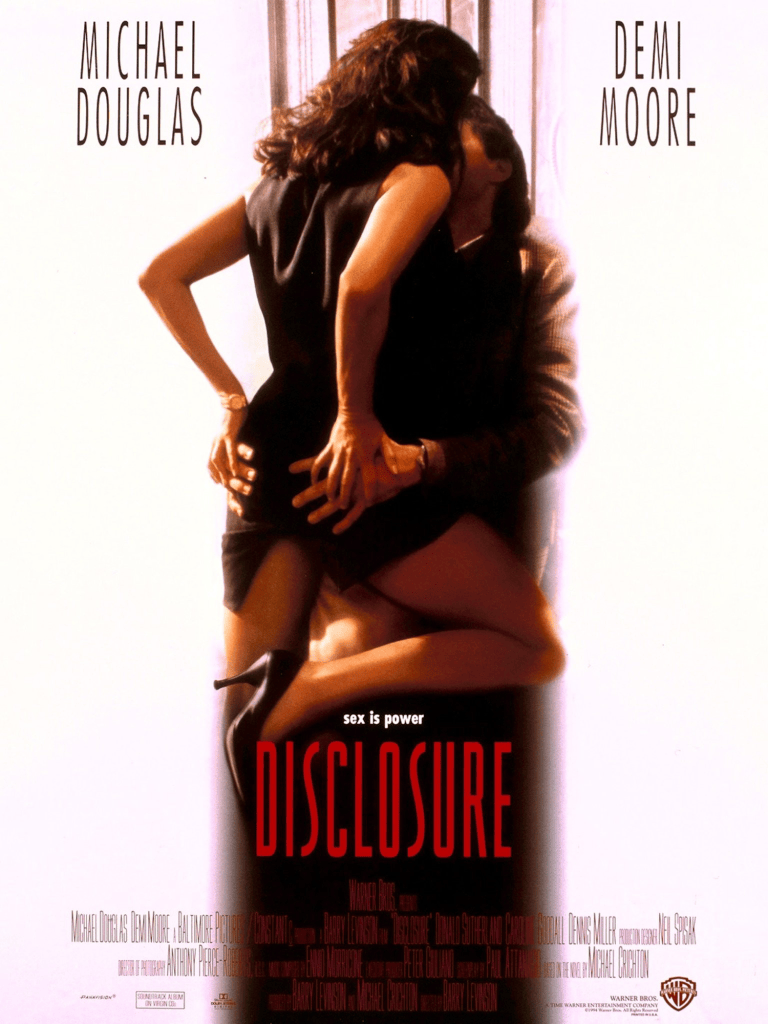
Disclosure (1994) is a relic of a better time when movies focusing on serious, adult concerns could be released by a major studio at Christmas time and become a box office success. The workplace harassment storyline was the major marketing hook for the film—it sure didn’t hurt that the harasser was stone-cold fox Demi Moore, who was at her absolute peak of sex appeal in the early to mid-1990s—but much of the movie actually ends up revolving around tech industry intrigue (and much of the then-modern CD-ROM and virtual reality tech now seems very much out of date). Throughout, Tom is the centerpiece, the protagonist. It really says something that one of the most famous and successful movies ever made about sexual harassment features a woman as the villain, even though in reality women are overwhelmingly the victims in these cases. But this is a movie, and movies need not reflect reality. This is a successful piece of slick, adult-oriented mainstream entertainment, and part of what makes it such a rousing success is how well Moore portrays the villain of the piece.

At one point Meredith states, matter-of-factly, “I am a sexually aggressive woman.” That’s her defining trait and characteristic in Disclosure—she’s sex on two legs and she’ll take it from whomever she wants whenever she wants. This assertiveness, as ferociously portrayed by Moore in what might be her best performance, is intense and hard not to love. I was a teenager when Disclosure came out, and if I was meant to side with Tom then, clearly, I missed that memo. I was all about Meredith. I think most men who saw Disclosure in 1994—and most men who watch it today—wanted to be Tom and be Meredith’s prey. I can almost hear her quoting another early-’90s antihero, Candyman—”Be my victim”—and many would nod affirmatively and offer themselves up to her dominant will. Goodness gracious, Meredith Johnson is a beast.

Back to my earlier comment about this being during Moore at peak sex appeal, she is absolutely boiling lava hot in Disclosure. It’s almost impossible to believe a human being could be that hot, but Demi Moore proves that, indeed, it’s possible. Her sex appeal makes it easier to forget she’s supposed to be the bad girl here. Frankly, we don’t care what happens to Tom. He’s another in a long line of similar Michael Douglas characters from that time period best categorized as the “anti-feminism male backlash” protagonists (see also: Fatal Attraction and Basic Instinct). Meredith might be more in the wrong here than Tom, but she looks so damn good and seems to have so much fun being bad that we can’t help but respect her predatory nature.
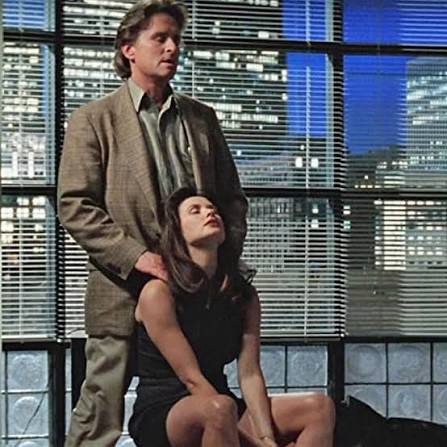
The script doesn’t give Meredith much depth; she’s fairly one-note, but Moore latches onto that note and plays it to the hilt, crafting a performance that’s never anything short of mesmerizing. When she’s onscreen, all eyes are on her and her weaponized body, which she uses to seduce men and hold power over them. The sex scene in Disclosure isn’t even about sex and certainly not about passion; it’s about exerting power, control, and dominance over another individual. That’s how Meredith gets to where she is in the tech world—she always plays to win. What’s not to love about that?