In which we revisit the tragedy which betell a group of five youths on August 18, 1973.
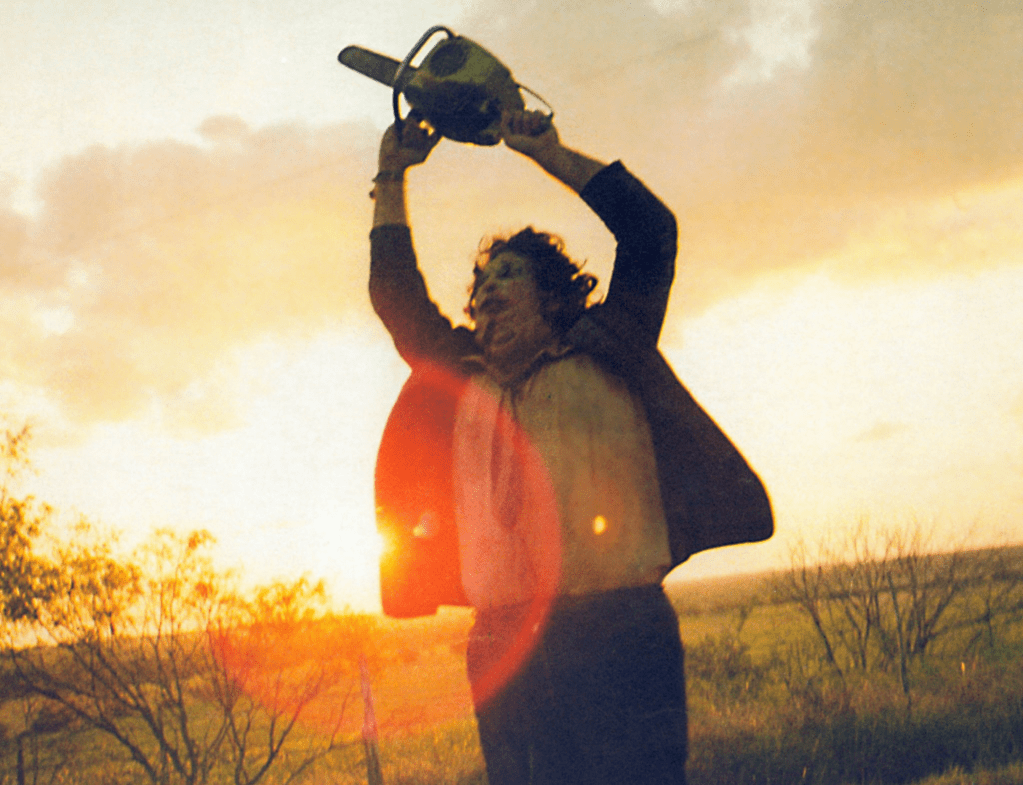
The film which you are about to see is an account of the tragedy which betell a group of five youths, in particular Sally Hardesty and her invalid brother, Franklin. It is all the more tragic in that they were young. But, had they lived very, very long lives, they could not have expected nor would they have wished to see as much of the mad and macabre as they were to see that day. For them an idyllic summer afternoon drive became a nightmare.
The events of that day were to lead to the discovery of one of the most bizarre crimes in the annals of American history, The Texas Chain Saw Massacre.
Is there a better opening crawl in cinema history than the opening narration in Tobe Hooper’s monumental 1974 film The Texas Chain Saw Massacre? I think not. As read by Dan Fielding—future Night Court star John Larroquette—it sets a pitch-perfect, eerie tone for what’s to follow. From his ominous delivery to his memorably weird pronunciation of “bizarre,” Larroquette more than earned his paycheck that day.
I was in high school the first I watched The Texas Chain Saw Massacre. I’ve seen so many movies since then that many first-time viewings are lost in time now (“like tears in rain” from Blade Runner), but I’ll never forget my first time with the Saw. My first steady girlfriend and I rented it on VHS, after having been spooked by stories about it ever since we were each too young to see it. We were horror fiends so, needless to say, expectations were sky high and, wow, did the film ever deliver on those expectations. A mind blowing experience was had by both of us that night (followed by some other mind blowing experiences after the film involving overheated young bodies colliding in the dark, but I digress). I remember it all like it was yesterday, and every time I’ve seen the film since—which is too many times to count—I’ve felt the same as I felt during that first watch: The Texas Chain Saw Massacre is one of the best films ever made. Full stop. It’s obviously one of the best horror films of all time, and its vital importance to American independent cinema cannot be overstated, but even beyond that it’s simply a perfect film. After Larroquette’s opening voice-over, Hooper cuts to a shockingly twisted tableaux in a cemetery, so vividly realized it sends chills down my spine just thinking of it, then relentlessly ratchets up the intensity and dread, frame by frame, until the cathartic last shots of Final Girl Sally (Marilyn Burns) riding away in the back of a pickup truck, covered in blood and laughing hysterically into the oppressively hot, Texas summer air, while just down the road an angry, hulking Leatherface (Gunnar Hansen) holds his chainsaw aloft, swinging it wildly in the air. Cut to black. Damn.

I haven’t gotten into the nitty gritty details of the plot or characters, nor delved into the uniformly excellent direction, cinematography, set design, etc. here, but that’s not for lack of love for every single aspect of this phenomenal film. I started writing a lengthy love letter to the film several years ago, which quickly spun off into an appreciation for a few of the sequels (TCM 2 and TCM: The Next Generation, specifically) and a vitriolic rant about the truly terrible 2022 “reboot,” then continued tangentially spirally of in too many disparate directions before the entire unwieldy mess collapsed in on itself—and on me. I had to set it aside and still haven’t gone back to heavily edit and revise, which it needs, let alone figure out how to conclude the damn thing. Instead, I just started fresh today and tried to keep it fast and loose. Sparked by the memory of that first viewing, all those decades ago. Free-form thoughts. Sometimes it’s difficult to write about something you love so much—mere words don’t seem to do it justice. This happens to me frequently when writing about Michelle Pfeiffer and her films, and it happens whenever I try to put together a cogent appreciation for a beloved film like The Texas Chain Saw Massacre.
I always think fondly of the terror that The Texas Chain Saw Massacre instilled in those two teenagers on that indelible night thirty-odd years ago. Sure, part of what keeps that evening burning brightly in my memory is the warm, sensual body of my amorous companion at the time, who always lit my fire, if you know what I mean, and I think you do. Beyond that, though, lies something even more intense: the shared experience of a startling cinematic discovery that dramatically altered not only how we perceived and processed the horror genre, but also the art of filmmaking itself.

 The Starfire Lounge
One thought on “Memories of the Mad and Macabre”